First, what we publish and what we don't
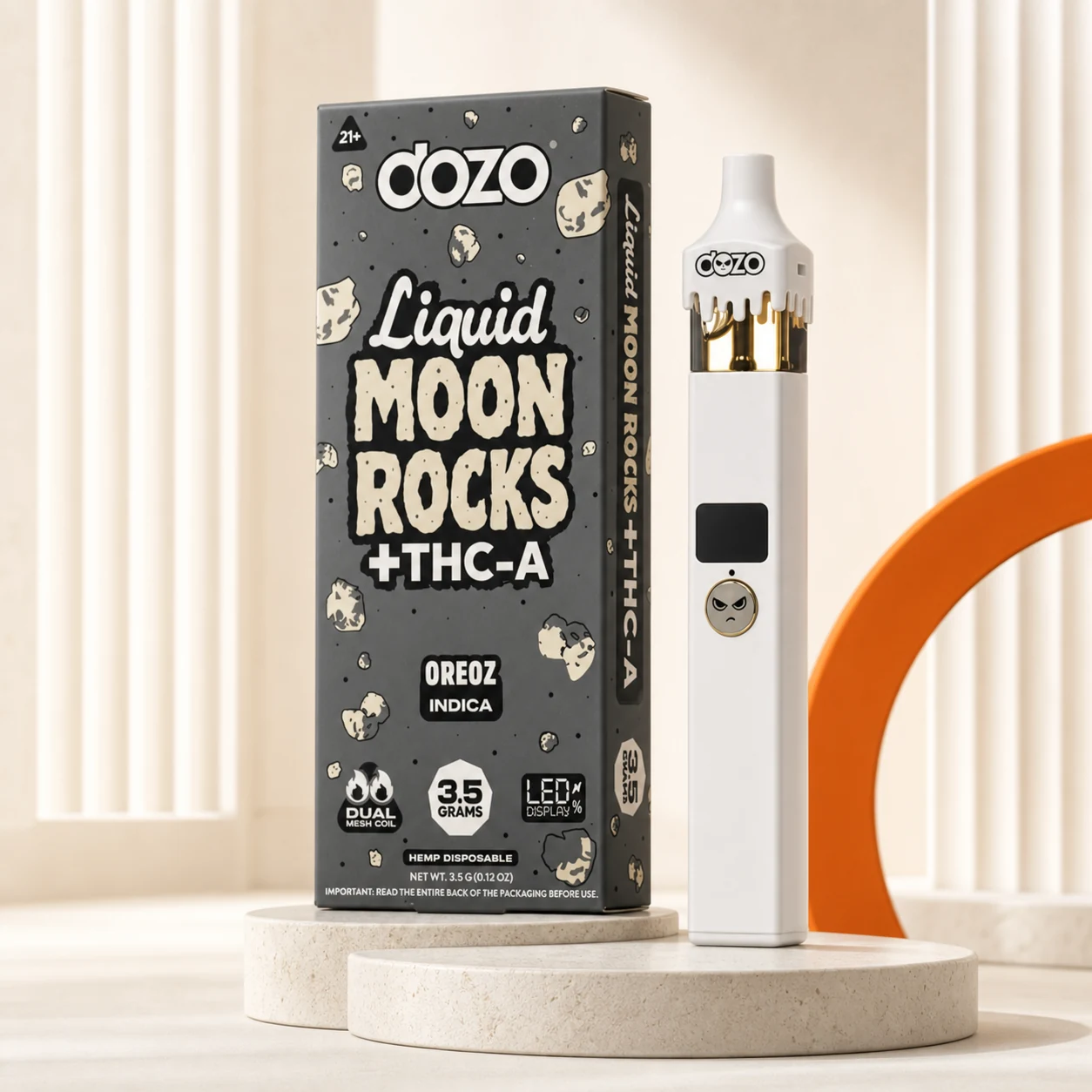
We do not print COA numbers on our product pages. Our product data does not carry them, and a report identifier that does not resolve is worse than none — it invites a check that fails. Where a manufacturer states that a product is third-party lab tested, we say so; DOZO does, for the Liquid Moon Rocks.
So this guide is not a walkthrough of a document we hand you. It is what to do with one when a manufacturer publishes it, which most do somewhere on their own site or behind a code on the packaging.
The header: who tested what, and when
Before any result, a COA identifies the laboratory, the client who submitted the sample, a sample identifier, and dates for both receipt and testing. This section is the one people skip and it is the one that most often settles the question.
The lab should be a third party rather than the manufacturer. The sample identifier should tie to the batch you are holding. And the date should be recent enough to plausibly cover your product — a report several years older than the item in your hand is describing something else.
The cannabinoid panel
This is the table everyone opens the document for. It lists each cannabinoid the lab tested for, usually as a percentage by weight and often also in mg per gram.
Two conventions cause most of the confusion. First, THCA and delta-9 THC appear as separate rows, because they are separate compounds. Second, many reports carry a Total THC row calculated with a conversion factor, since decarboxylation loses mass. Reading the THCA row as though it were the delta-9 row, or vice versa, is the single most common misreading of these documents.
You will also see ND and LOQ. ND means none detected. LOQ is the limit of quantitation — the smallest amount the method can put a reliable number on. A result below LOQ is not zero; it is below the point where the lab will commit to a figure.
The safety panels
A full COA carries more than cannabinoids. Depending on the state and the lab, it may include pesticides, residual solvents, heavy metals, microbials and mycotoxins. Each is reported as pass or fail against a limit.
These are the panels that matter most for anything inhaled, and they are the ones most often missing from a partial report. A document that shows only a cannabinoid panel is not wrong, but it is answering the marketing question and not the safety one.
| Panel | Looking for |
|---|---|
| Cannabinoids | Which compounds are present, and how much |
| Residual solvents | Extraction solvents left behind in the product |
| Pesticides | Agricultural chemicals carried through from the plant |
| Heavy metals | Lead, arsenic, cadmium, mercury |
| Microbials | Bacterial and fungal contamination |
| Mycotoxins | Toxins produced by mould |
Four checks that take a minute
- Does the batch or sample ID on the report match the one on your package? A COA for a different batch is a COA for a different product.
- Is the laboratory independent of the manufacturer, and does it exist? A lab name with no website is a finding in itself.
- Is the report complete, or only the cannabinoid page? Safety panels are the ones worth having.
- Does the document have a QR code or a lookup link that resolves on the lab's own domain? A PDF hosted only by the seller proves less than the same PDF served by the lab.
What a COA cannot tell you
A lab report describes a sample's composition. It is not a statement about what a product will do for you, and no reading of one produces that answer. We make no health, medical or effect claims about anything on this shelf, and a certificate of analysis does not change what we are able to say.
Common questions
Do you publish COAs for your products?
We do not carry COA numbers in our product data, so we do not print them. Where a manufacturer states a product is third-party lab tested, we repeat that statement.
What does ND mean on a lab report?
None detected — the compound was not found at or above the method's detection threshold. It is distinct from a result below LOQ, which means present but below the point the lab will quantify.
Why are THCA and delta-9 THC listed separately?
They are different molecules. Many reports also give a calculated Total THC row, which applies a conversion factor because decarboxylation loses mass.
Is a cannabinoid-only report good enough?
It answers the potency question and none of the safety ones. Pesticides, residual solvents, heavy metals and microbials are the panels worth looking for on anything inhaled.